The Millennium Clock Tower: Tim Stead’s last major work
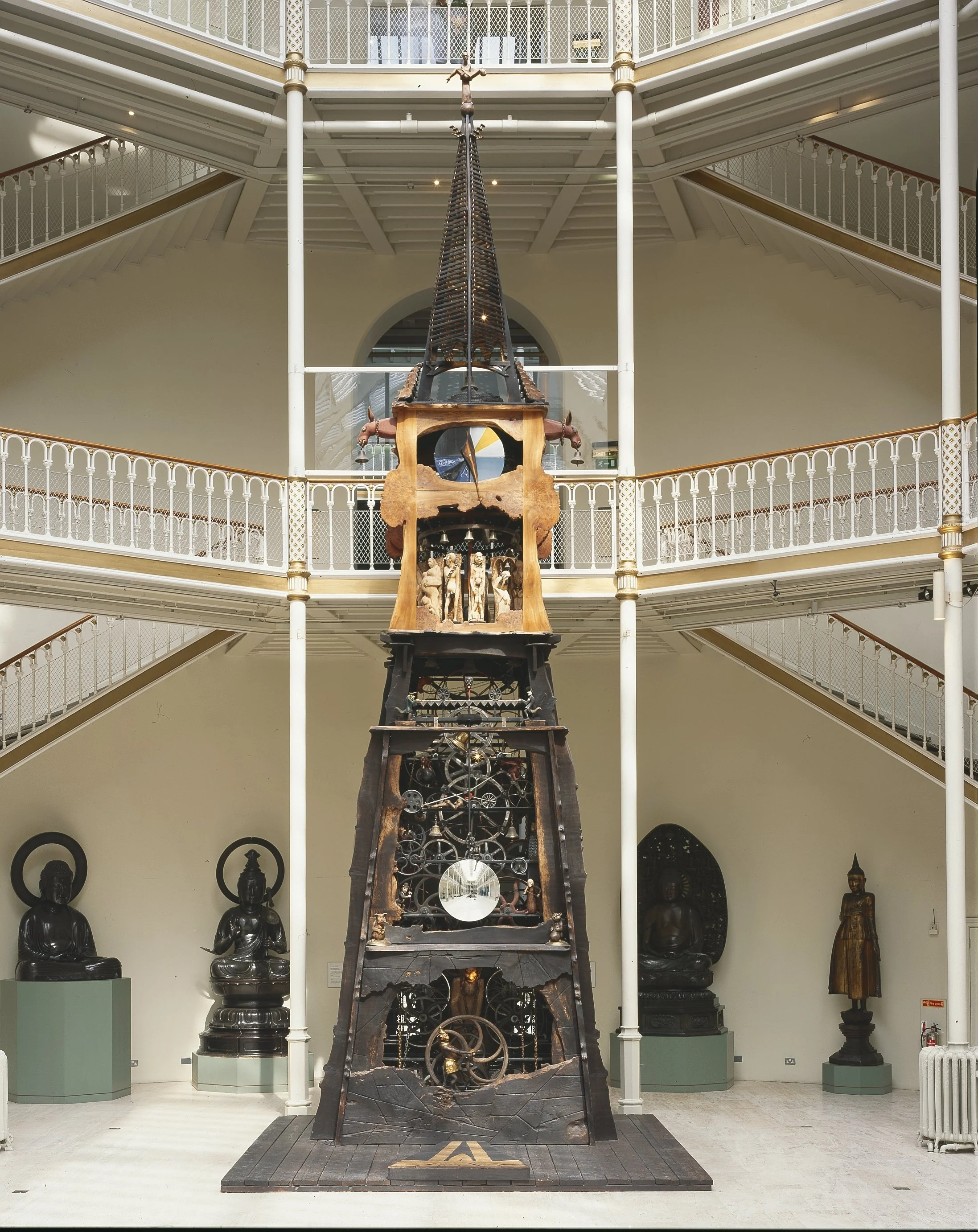
The Millennium Clock was unveiled at the National Museum of Scotland in Edinburgh at twelve noon on 1st January 2000. But the initial idea came in 1995 when Julian Spalding, Director of Glasgow Museums, wanted to commission a Millennium Clock for Glasgow’s Kelvingrove Art Gallery.
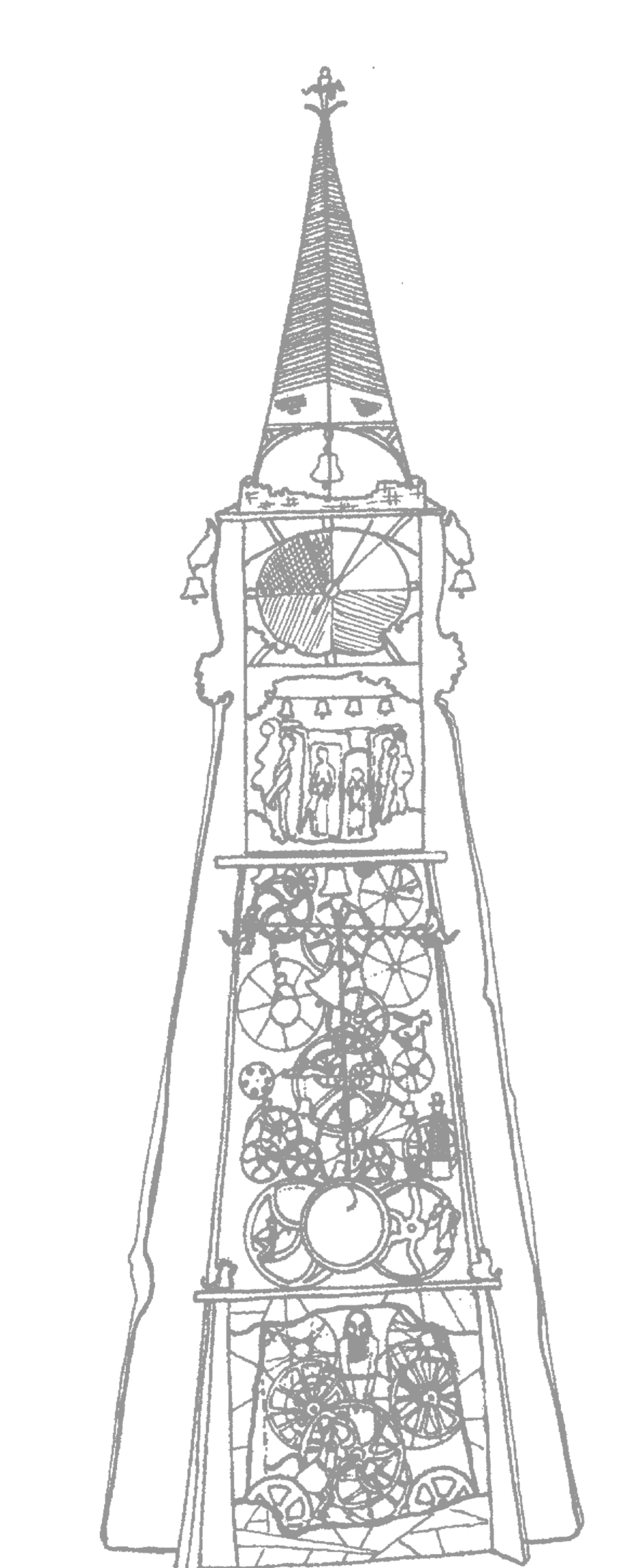
However, a restructuring of Glasgow’s cultural services meant that Julian’s job ceased to exist, so the project stalled. But in mid-1998 Sharmanka was negotiating an exhibition at the National Museum of Scotland (NMS) in Edinburgh and were asked, ‘Do you have a Millennium project?’. Mark Jones, then Director of NMS, leapt on the ambitious proposal. Funding had to be sourced, and since neither Tim not Eduard wanted to spend time making drawings, Maggy Stead prepared a set for the application. In February 1999 funding was provided by the Millennium Festival Fund.
This gave only ten months to complete an enormous project; the original plan had allocated three years and a larger budget. Echoing the way medieval cathedrals were built, the four artists formed a Company to make the Clock: Tim Stead the architect; Eduard Bersudsky the sculptor-mechanic; Jurgen Tübbecke the clock maker, and Annica Sandström the glass artist. Tatyana Jakovskaya and Maggy Stead managed the project.
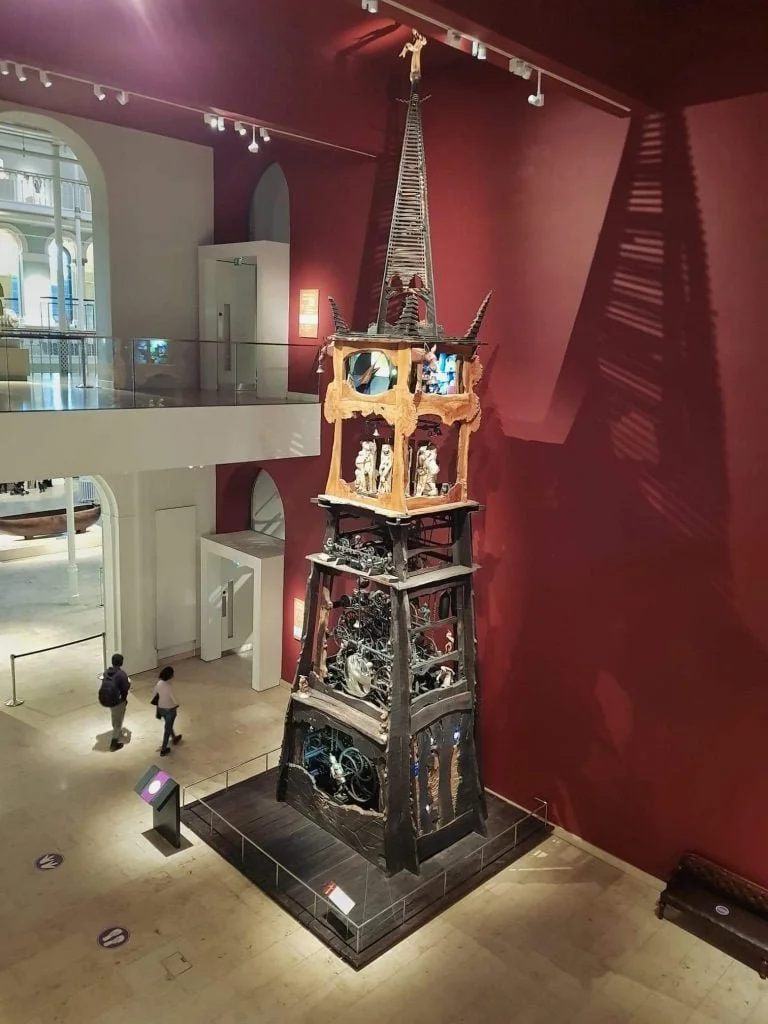
By 1999, Tim Stead’s cancer was advancing. It had been diagnosed in 1993 after Tim’s Botanic Ash exhibition in the Royal Botanic Gardens in Edinburgh but Tim, although weakening, never stopped working. His sculptures became smaller, and both poetry and photography occupied more of his time, but nevertheless he was able to conceive and construct the massive, ten-metre high cathedral-like structure that is the backbone of the Millennium Clock.
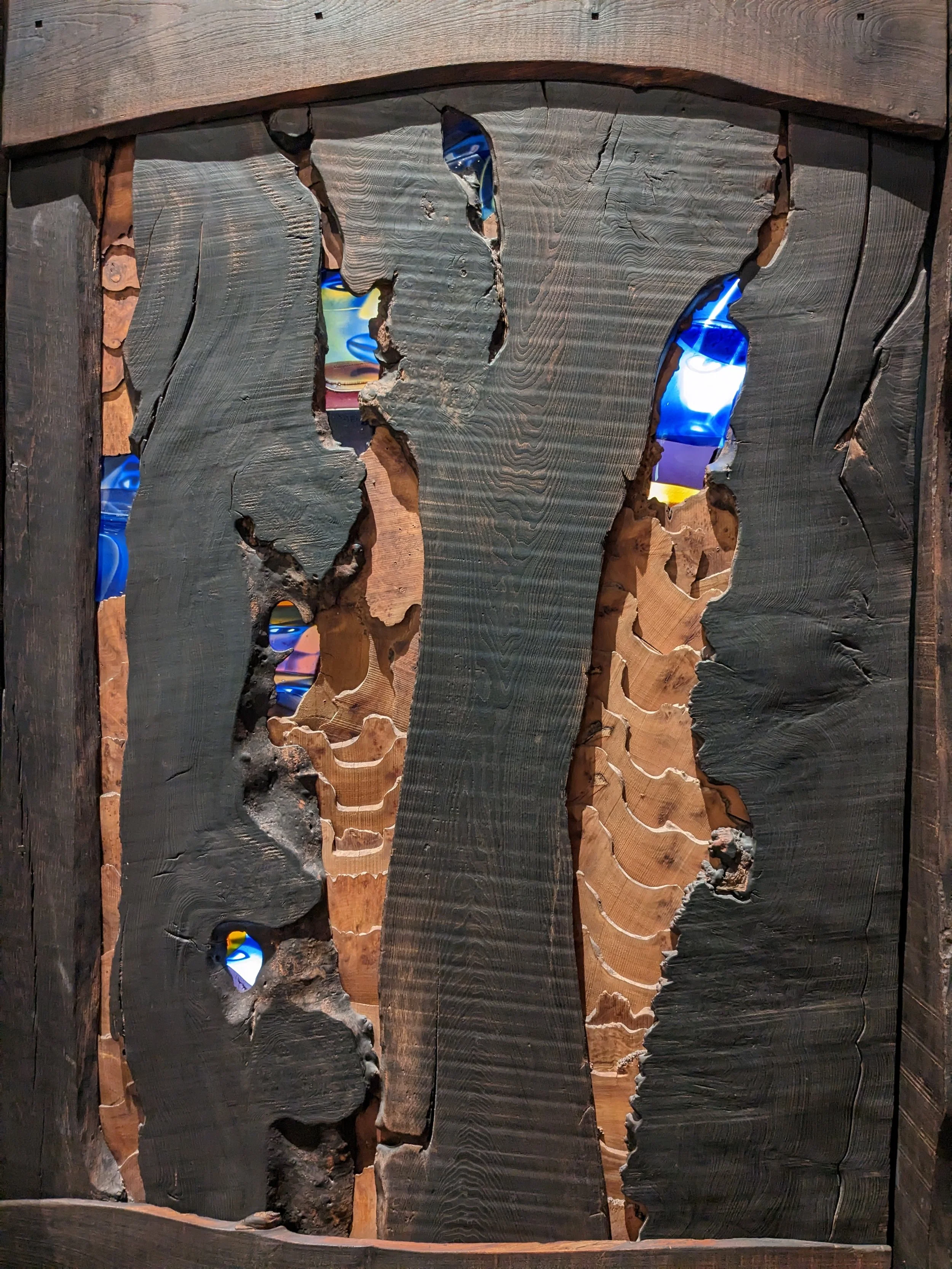
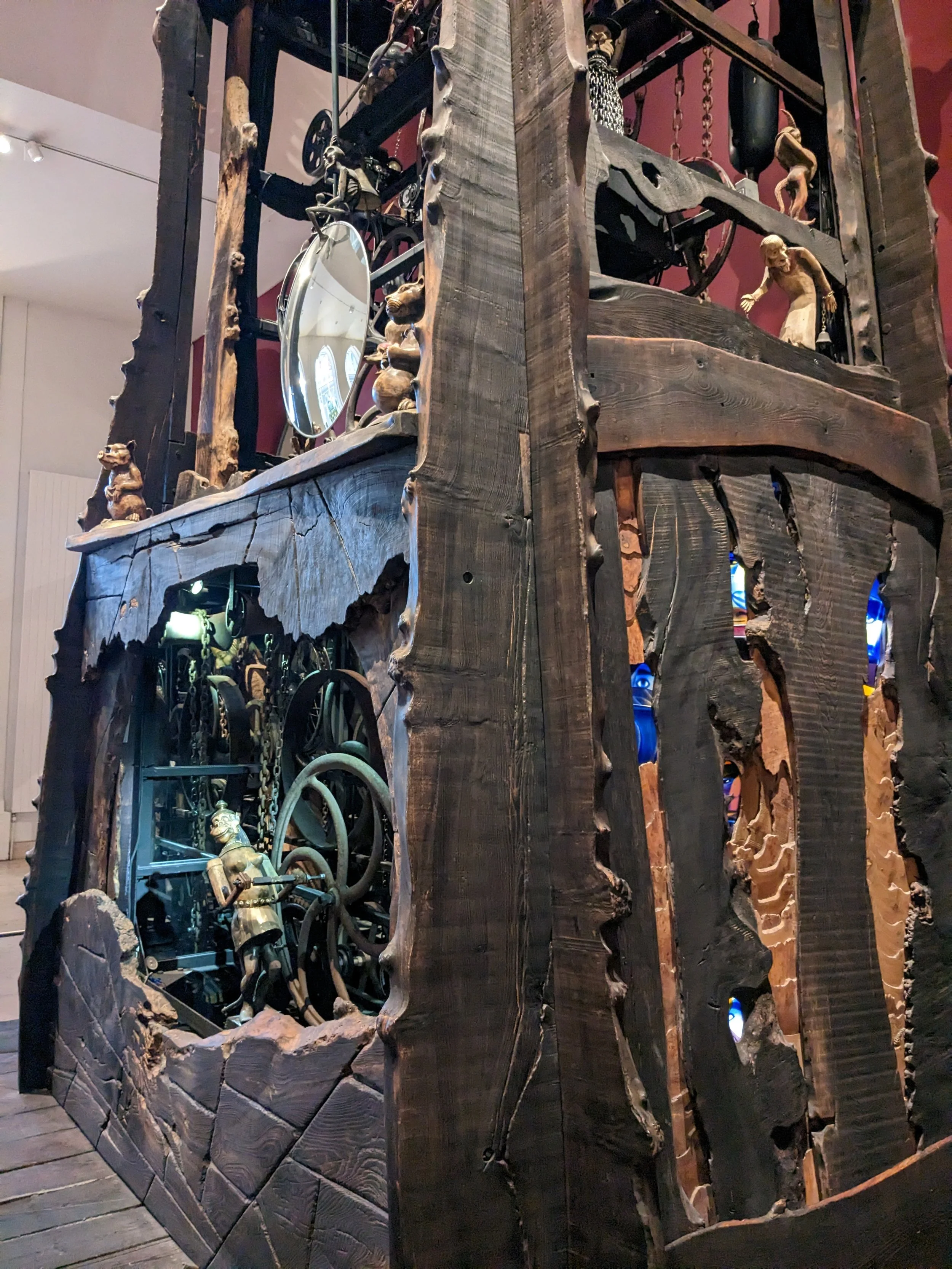
The Clock Tower is populated with Bersudsky’s thought-provoking carvings and has Sandström’s eerie glass eyes peering out at the world. As the clock mechanism clicks slowly back and forth, the figures activate, culminating in a vast mirror pendulum that reflects the audience back at itself. Powerful music completes the atmosphere. The Clock looks back rather than forward: talking of love, hate, work, play, humour, despair, life and death. It acknowledges the hardships of the 20th century in the hope that humanity will learn from its mistakes.
Originally conceived as a temporary exhibit, the Clock has proved so popular with audiences that the Museum has kept it permanently on display. It attracts hundreds of viewers every week and is considered one of the Museum’s highlights.
With thanks to Sharmanka for providing the backbone to this story which has many more layers to it than there is space to write about here.